
Why Do I Need Dental X-Rays if Nothing Hurts?

Dental Implant vs Bridge: Which Is Right for You?
September 20, 2026
Canker Sore or Cold Sore? How to Tell and What to Do
September 22, 2026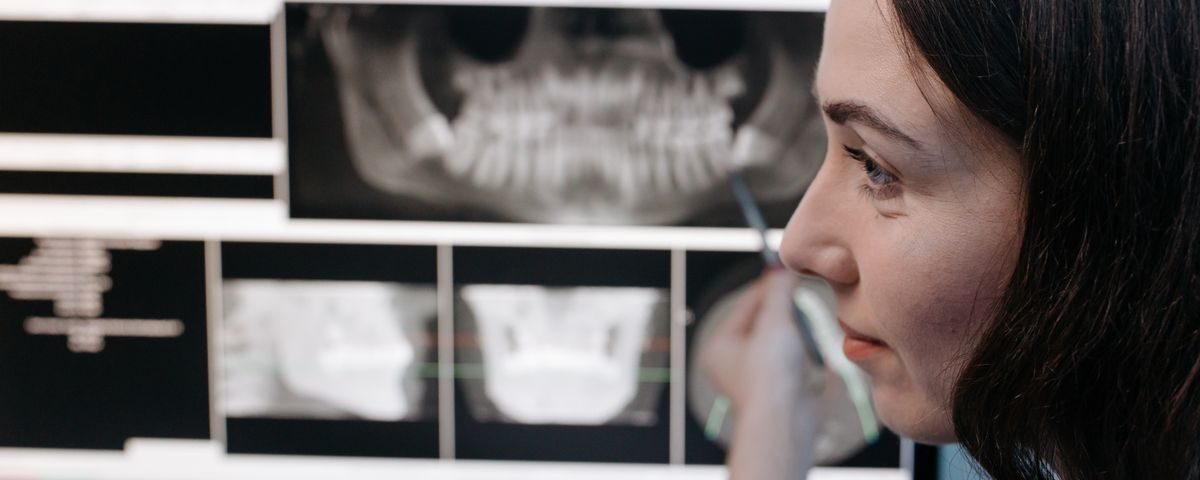
By Lovik Mirzaeian, DDS. Updated September 2026.
You need x-rays when nothing hurts because pain arrives late. Decay between teeth, bone loss from gum disease, infection at the tip of a root and cysts in the jaw are all silent until they are well advanced. By the time a tooth hurts, the cheap and simple version of the fix has usually passed.
About a third of what a dentist needs to assess cannot be seen by looking in your mouth. Here is what x-rays actually show and how often you need them.
What a Dentist Cannot See Without Them
Decay Between Teeth
The contact points where teeth touch are hidden from view and from a mirror. This is where a large share of adult cavities start, and they are only visible on a bitewing x-ray. Caught there, it is a small filling. Missed for two years, it can reach the nerve.
Decay Under Existing Fillings and Crowns
Old restorations develop gaps at the margins and decay creeps underneath. From above the filling looks intact.
Bone Levels
Gum disease destroys the bone that holds teeth. Pocket measurements tell part of the story, x-rays show the actual bone height and whether it is stable compared to previous images.
Infection at the Root Tip
A dead nerve produces a dark area at the end of the root long before there is any pain. Many are found by accident on a routine x-ray in a tooth the patient had no complaints about.
Impacted Teeth and Cysts
Wisdom teeth angled into the tooth in front, and the occasional cyst quietly hollowing out bone. Both silent.
Anything Below the Gumline
Root fractures, retained root fragments, extra teeth, and the position of the nerve in the lower jaw when planning treatment.
The Types You Will Encounter
Bitewings show the crowns of the back teeth on both jaws in one image, and they are the main tool for finding decay between teeth. Usually two or four of them.
Periapicals show a whole tooth including the root tip, used when there is a specific concern.
A panoramic image shows the entire jaw in one sweep, useful for wisdom teeth, jaw joints and general overview, though it lacks the detail to find small cavities.
A cone beam scan gives three dimensional imaging, used for implant planning and complex cases rather than routinely.
About the Radiation
The dose from dental imaging is genuinely small. Four bitewings sit in the range of a day or so of the background radiation everyone receives from the environment anyway, and digital sensors reduced the dose substantially compared to film.
That does not mean unlimited images. The principle is the lowest dose that answers the clinical question, which is why frequency should follow your risk rather than the calendar. The American Dental Association sets it out the same way.
If you are pregnant, say so. Routine imaging is usually deferred, urgent imaging is done with shielding.
How Often Is Right for You
High risk, meaning active decay, a history of frequent cavities, dry mouth, gum disease or heavy sugar intake, generally means bitewings every six to twelve months.
Low risk, meaning no new cavities for years, healthy gums and good home care, often means every two to three years.
New patients usually need a baseline set regardless, because without previous images there is nothing to compare against, and comparison over time is where most of the value sits.
This is one of the things reviewed at a routine dental exam, and it is reasonable to ask why a particular image is being taken. Any dentist should be able to answer that in a sentence.
Digital Versus Film, and Why It Matters
Almost all modern practices use digital sensors rather than film. The dose is meaningfully lower, the image appears instantly rather than after processing, and it can be enlarged and contrast adjusted on screen, which finds smaller lesions than film ever did.
The practical benefit for you is that the image goes up on a monitor and you can be shown exactly what is being talked about. If a dentist tells you there is decay between two teeth, ask to see it. On a bitewing it looks like a dark notch eating in from the side, and once someone points it out it is obvious.
Comparison Is the Real Value
A single x-ray tells you the state of things today. Two x-rays two years apart tell you the direction of travel, which is far more useful. A small shadow that has not changed in three years is very different from the same shadow that has doubled.
This is why previous images are worth requesting from a former dentist rather than simply starting fresh, and why the file matters as much as any individual picture in it.
Frequently Asked Questions
Why do I need dental x-rays if nothing hurts?
Because pain is a late symptom. Decay between teeth, bone loss from gum disease, infection at a root tip and cysts are all invisible and painless until they are advanced. X-rays show roughly a third of what a dentist needs to see, and it is the third you cannot see by looking in a mouth.
How often should I have dental x-rays?
It depends on your risk, not a fixed schedule. Someone with frequent cavities or active gum disease may need bitewings every six to twelve months. Someone with healthy teeth and no history often goes two or three years. A full set is typically every three to five years.
Are dental x-rays safe?
The dose is very small. A set of four bitewings is roughly comparable to a day or two of ordinary background radiation, and digital sensors cut the dose substantially against old film. A lead apron and thyroid collar reduce it further. The risk of missing untreated disease is the larger one.
Can I refuse dental x-rays?
You can, and you should be told what that means. Without images a dentist is examining a third of the picture, so decay between teeth and bone loss will be found later and larger. If you are pregnant or concerned about the dose, say so, because timing and type can often be adjusted rather than skipped.
Due a Check Up? Bring Your Previous X-Rays
If you have had images taken elsewhere in the last couple of years we can often request them rather than repeat them, and having something to compare against is more useful than a fresh set on its own. Contact us to set up a consultation and mention where you were seen before.
Lovik Mirzaeian, DDS has achieved extensive training in multidisciplinary dental treatments. His credentials include Dental Implants, Cosmetic Dentistry, Full Mouth Reconstruction, Endodontics, Oral Surgery, Orthodontics, and Sleep Sedation. Our office puts your comfort and smile first, and we are dedicated to giving you top-notch dental care. Get ready to show off your perfect smile!
Looking for a trusted family dentist in Clovis? Dr. Mirzaeian welcomes new patients of all ages.